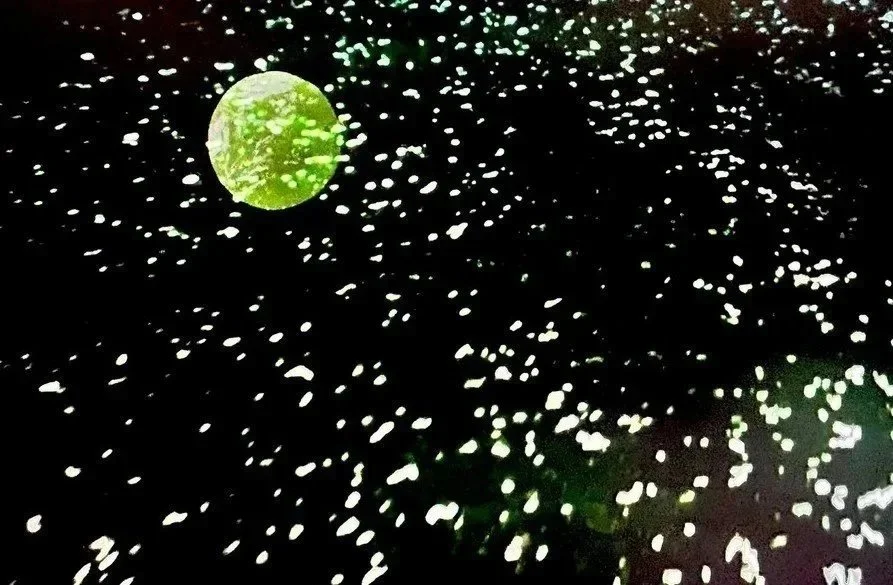
My new moving image work, green moon rising (2026) is part of an ongoing series which reflects on the flux and unpredictability of coastal environments. The viewer’s attention is drawn through a porthole to the swirling ocean below. It is 10 August 2025; a full moon sits on the horizon. Night descends and small floating white masses drift on murky, olive-oil water toward an uncertain future.
Tide and wind shape otherworldly forms: clustering, wobbling, breathing, accumulating…

Judith Klavins, across, 2025, mp4 video, 4 mins 46 secs, FELTspace Gallery, Adelaide

Judith Klavins, atmospheric reading 1, 2025, photogrid on brushed aluminium, AiR exhibition - King Island Gallery, Currie, image courtesy of artist
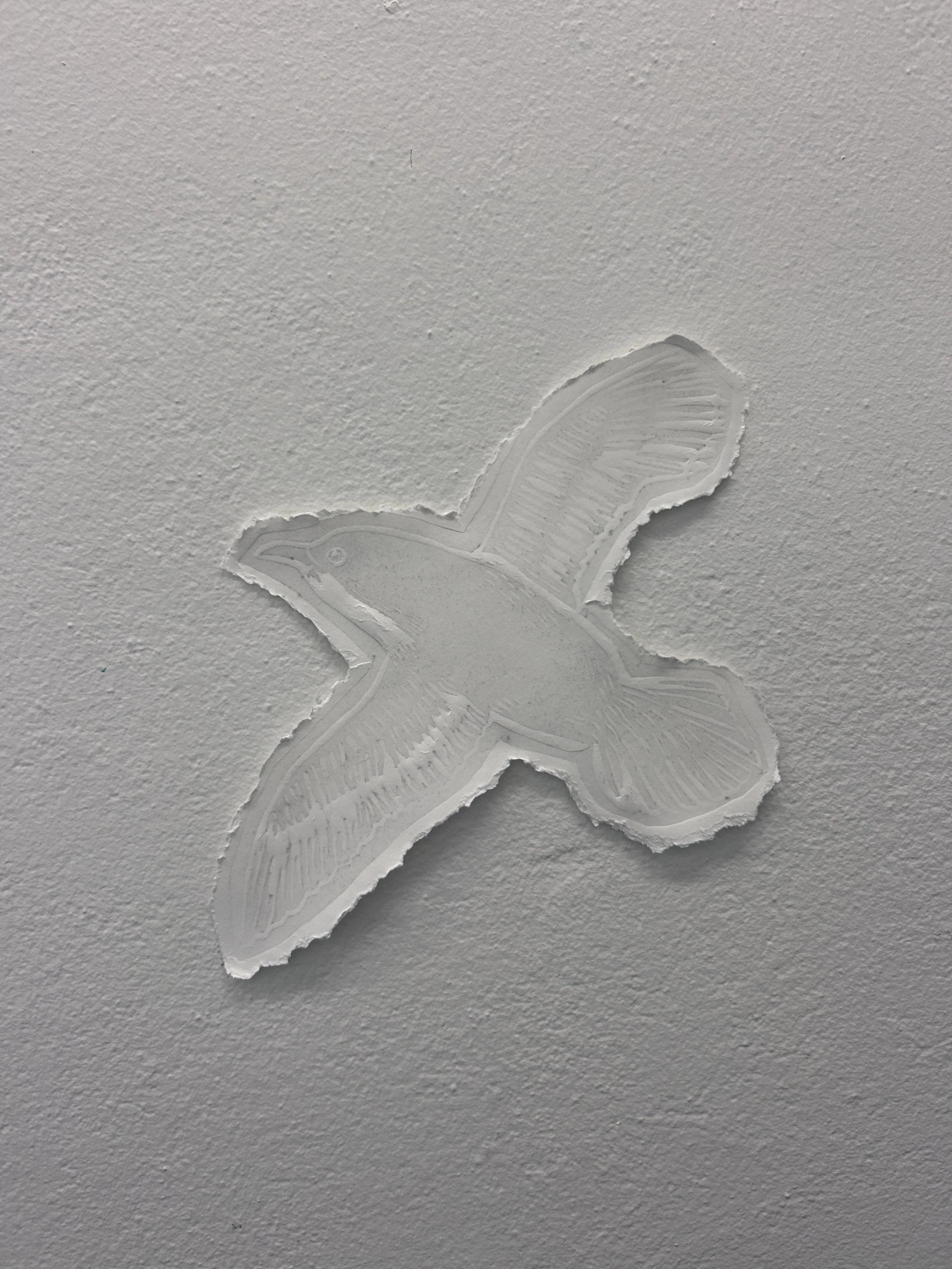
Judith Klavins, mutton bird migration, 2025, embossed linoprint on watercolour paper, AiR exhibition - King Island Gallery, Currie

Windsignalling Instrument no. 1 (detail), 2022, Image by James Field
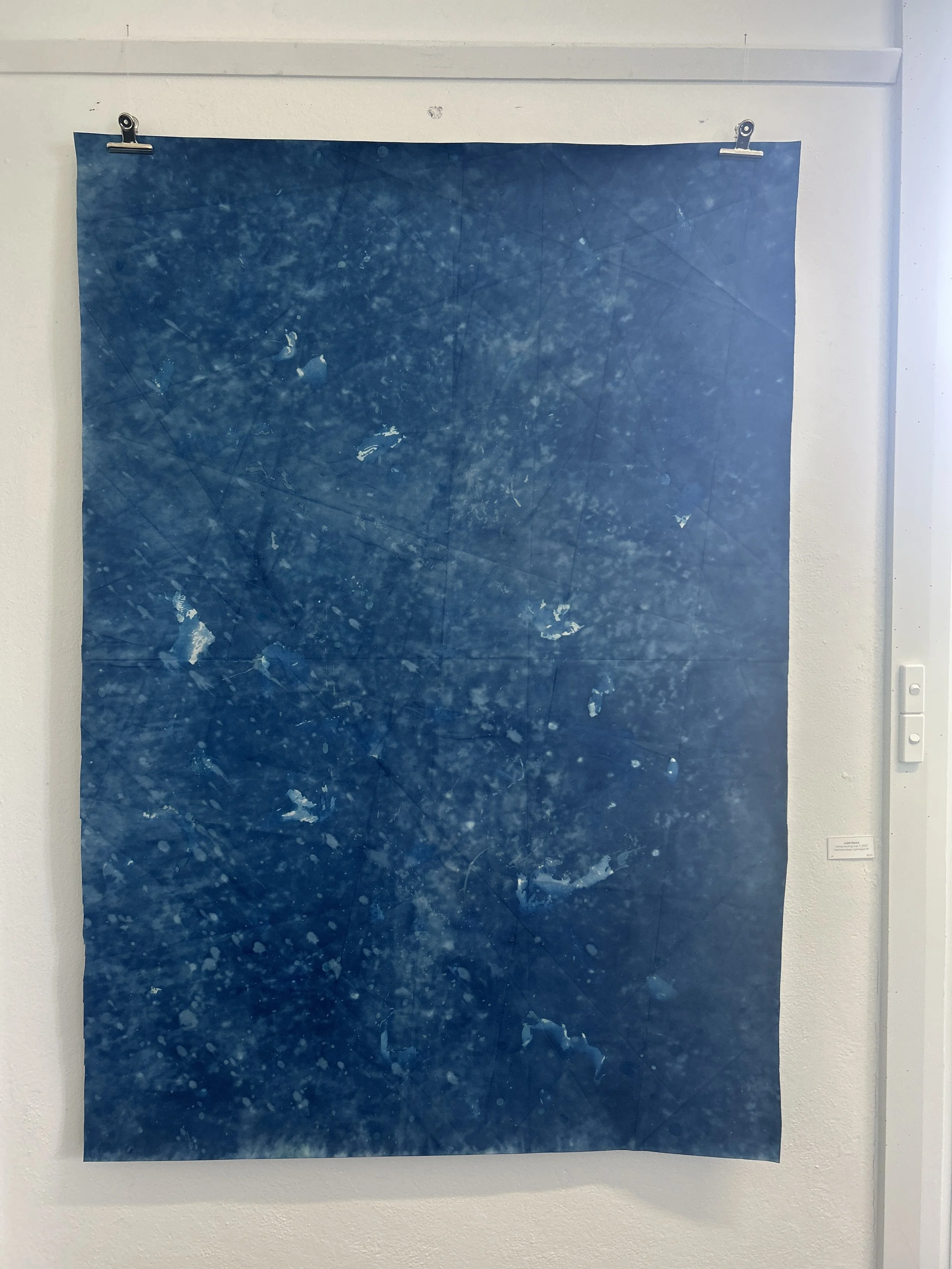
Judith Klavins, infinity tracking map 1, 2025, cyanotype on Montvaal paper, AiR exhibition - King Island Gallery, Currie, image courtesy of artist
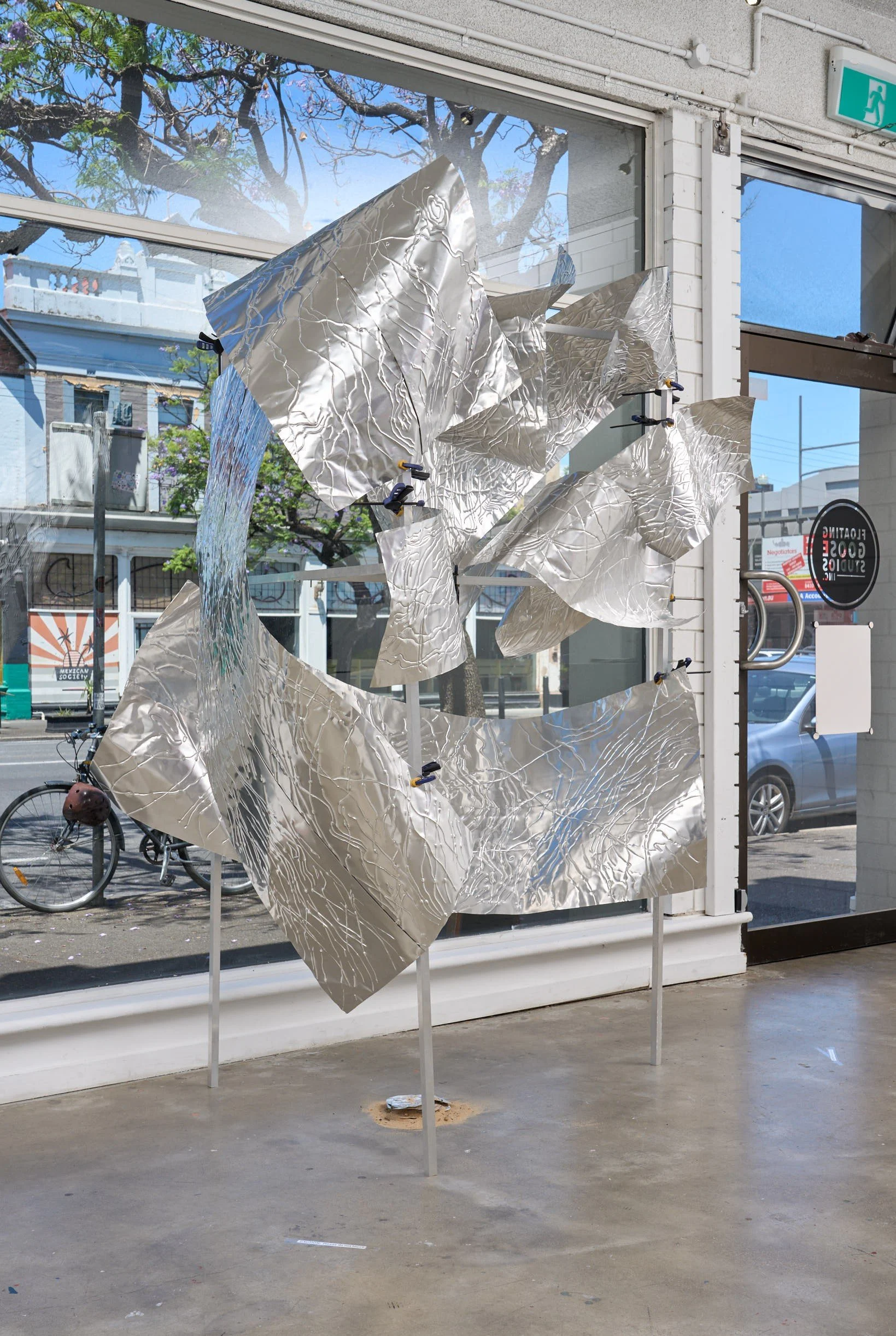
water ways exhibition with Amanda Seacombe, Floating Goose Studios, 22 Nov 2024 - 15 Dec 2024

water ways exhibition with Amanda Seacombe, Floating Goose Studios, 22 Nov 2024 - 15 Dec 2024

Shift 2 (detail), 2022, Image by James Field
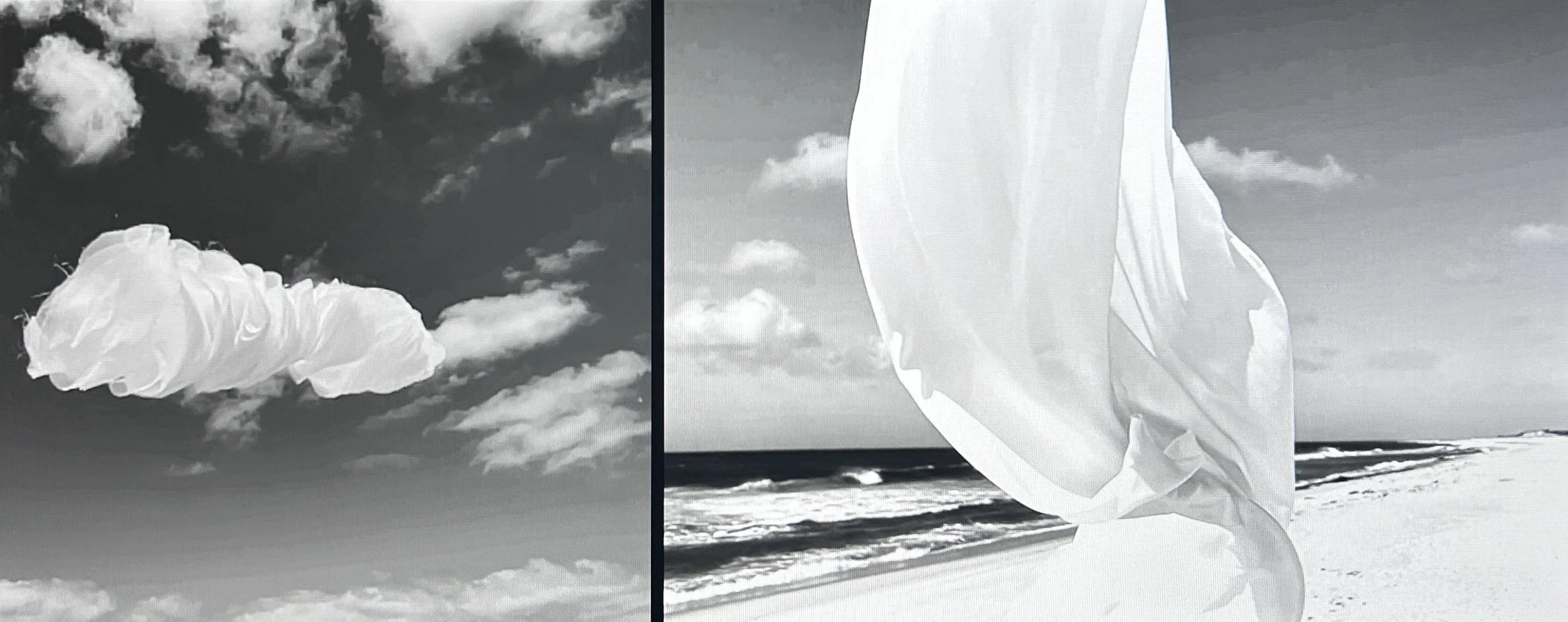
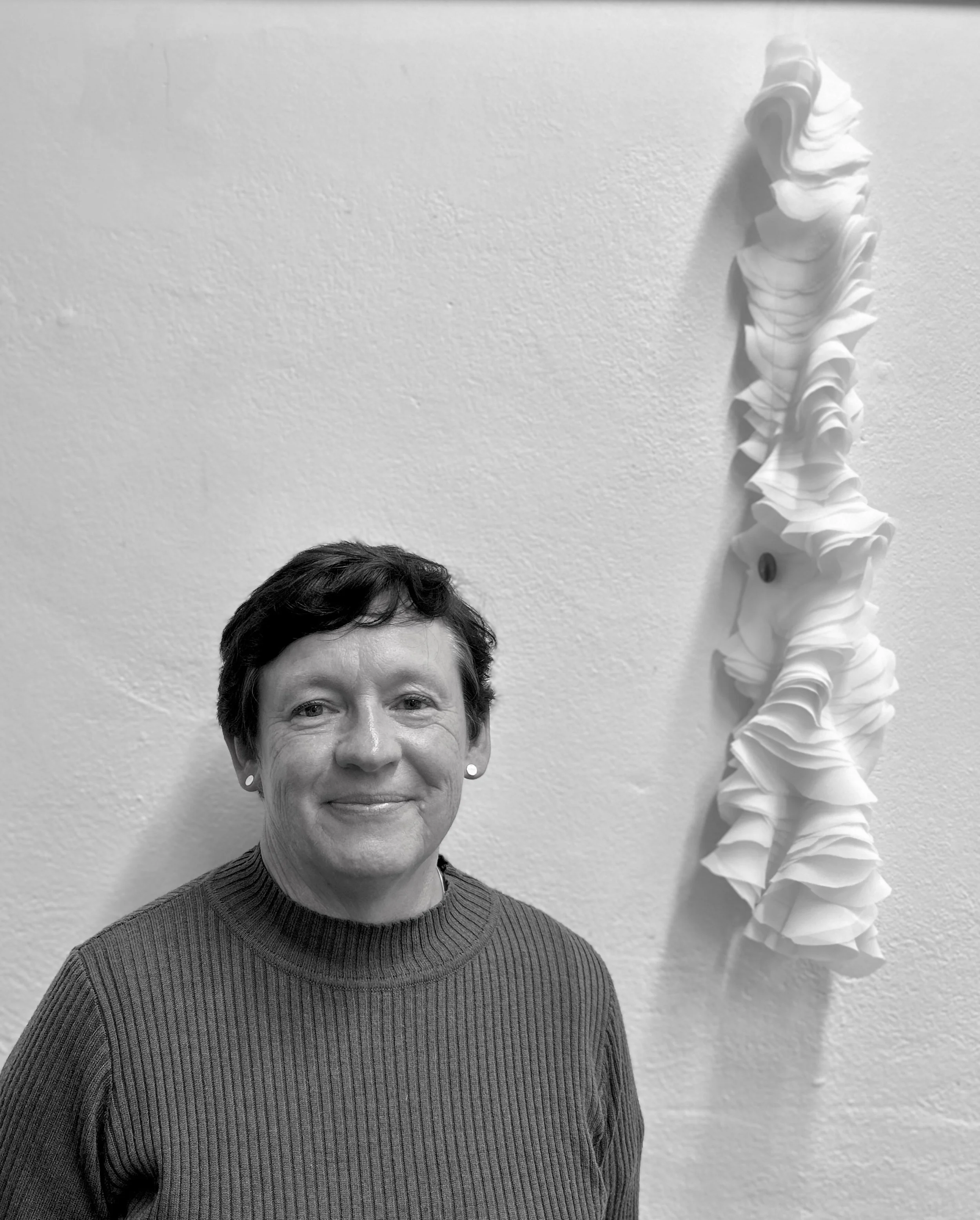
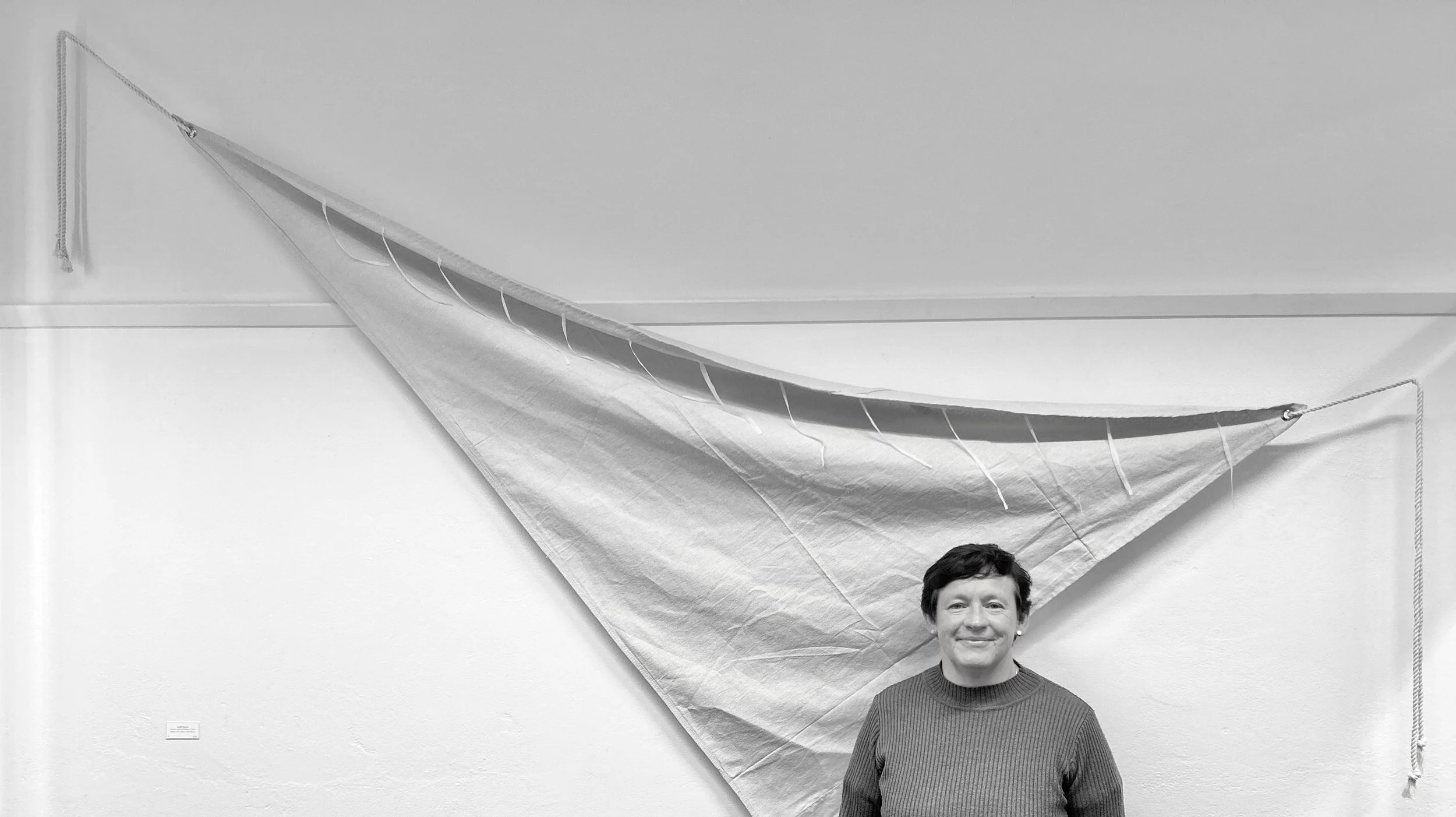
Artist Judith Klavins

Trace (detail), 2022, Image by James Field
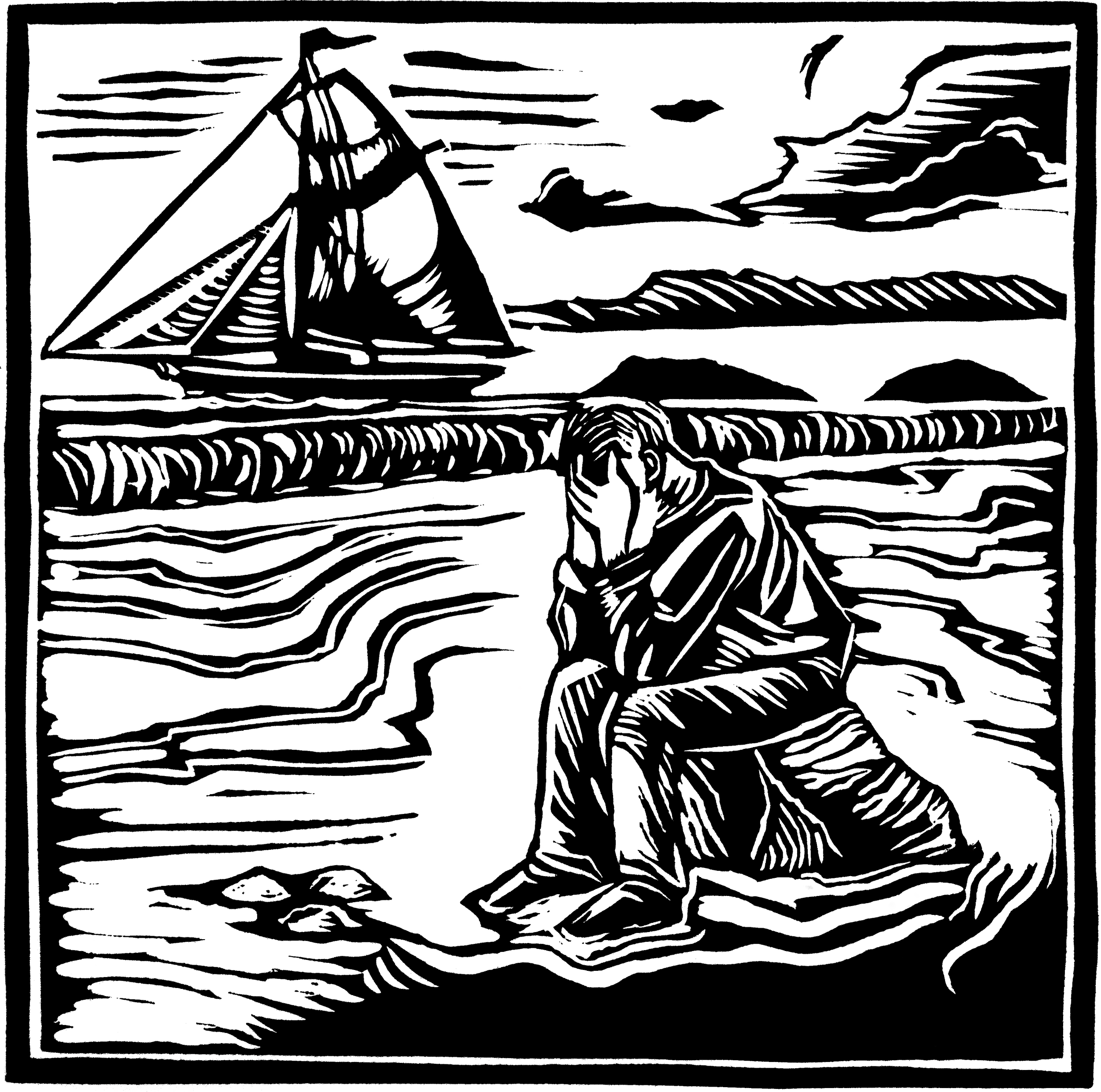
‘Part of exhibition by Judith Klavins, Diary of John Scott: 1836 - 1843, King Island, Tasmania’, 2016, Allport Library and Museum of Fine Arts, Hobart, lutruwita/Tasmania
From the Allport exhibition ‘Stories in Ink’ (2016) | Flickr
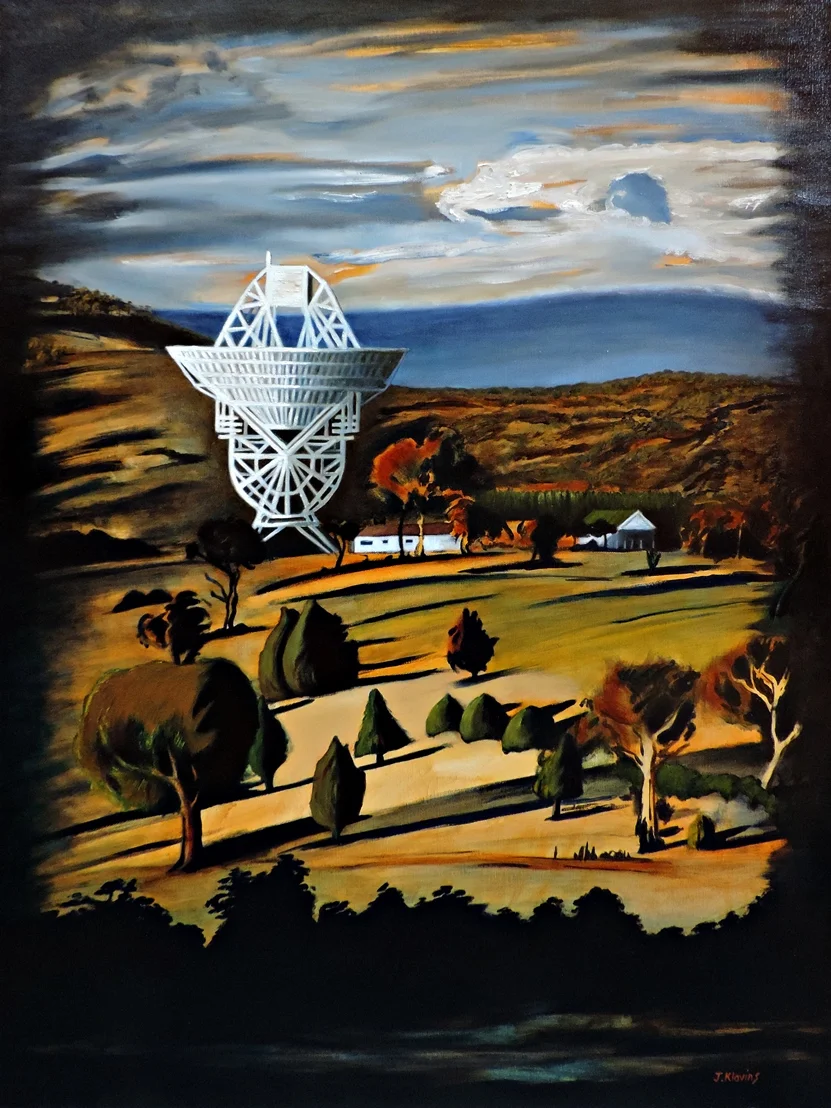
The satellite dish at Mt Pleasant Radio Observatory flashed into my vision, looking strange and surreal in the late afternoon light; this huge white glowing man-made structure perched on the rolling hills, as it if had just landed from outer space. I have since discovered that amazing scientific achievements of Grote Reber, the American pioneer of radio astronomy, who moved to Bothwell Tasmania to be nearer the South Pole, where outer space radio signals were strong, and man-made radio interference low. The Grote Reber Museum now sits at the Mt Pleasant site.